

Missing a tooth can affect more than the appearance of your smile. Tooth loss can make chewing more difficult, affect how your remaining teeth come together, and eventually contribute to changes in the jawbone. Fortunately, there are several options for replacing missing teeth, including dental implants, dental bridges, and dentures.
Dental implants are one of the most comprehensive options available because they are designed to replace both the visible tooth and its root. But that doesn’t necessarily mean implants are the right choice for everyone. The best solution depends on your oral health, the number of teeth you’re missing, your jawbone, and your personal goals.
At High Country Dental, we can evaluate your smile and help you understand which tooth replacement option may be appropriate for you.
What Are Dental Implants?
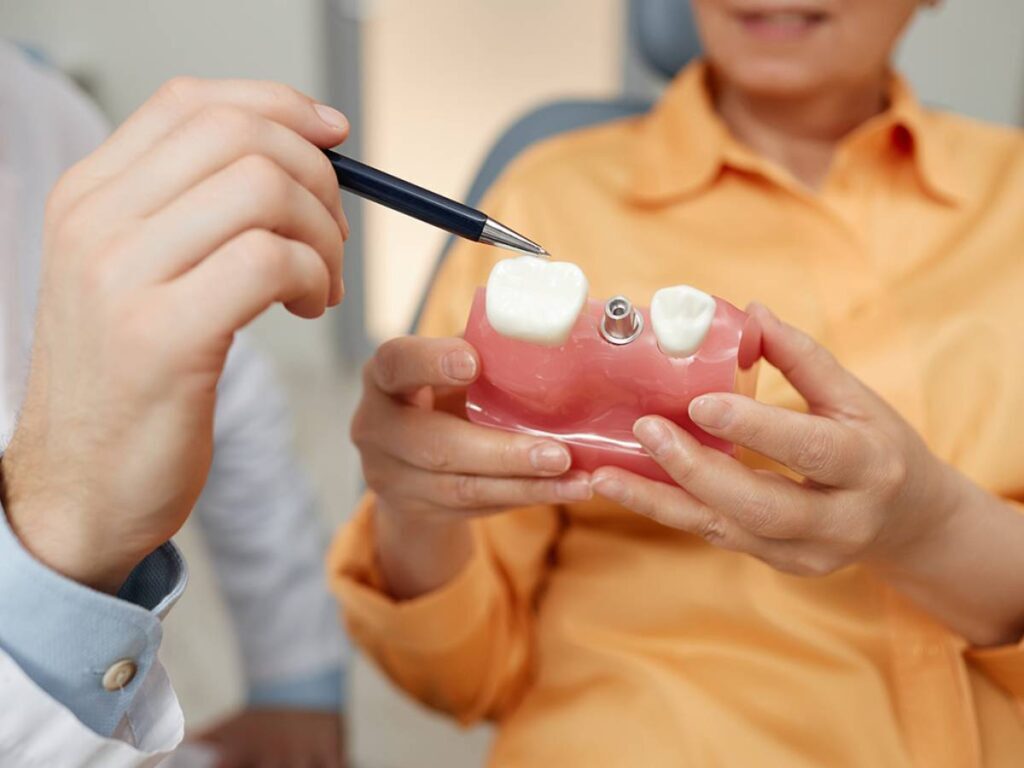 A dental implant is a small post, typically made from titanium or another biocompatible material, that is surgically placed into the jawbone. The implant acts as an artificial tooth root and can eventually support a dental crown, bridge, or implant-supported denture.
A single implant can replace one missing tooth, while multiple implants can be used to support several replacement teeth or a full arch.
Because implants are anchored in the jawbone rather than simply resting on the gums, they can provide a stable foundation for replacement teeth.
When Should You Consider Dental Implants?
Dental implants may be worth considering in several situations.
You Are Missing One Tooth
If you’ve lost a single tooth, a dental implant can replace it without requiring the neighbouring teeth to support a restoration. An implant-supported crown is designed to fill the space while maintaining the appearance and function of an individual tooth.
A traditional dental bridge is another option for replacing a single missing tooth. Your dentist can help you compare the benefits and considerations of each approach.
You Are Missing Several Teeth
Implants aren’t limited to individual teeth. If you’re missing multiple teeth, several implants can be used to support an implant bridge or other restoration.
This can provide an alternative to replacing each missing tooth individually and may offer greater stability than a removable partial denture in appropriate cases.
You Want a More Stable Alternative to Removable Dentures
Traditional dentures are removable and rely on the shape of the gums and underlying tissues for support. While dentures can be an effective solution for many patients, some people find that they move while eating or speaking.
Implant-supported dentures use dental implants to provide additional stability. The denture remains removable in some treatment designs, but the implants help anchor it in position.
You Want to Help Preserve Your Jawbone
After a tooth is lost, the bone that previously supported its root can gradually shrink because it is no longer receiving the same stimulation.
Because dental implants are placed within the jawbone, they can provide stimulation similar to that of a natural tooth root and may help maintain bone in the area.
When Might Another Tooth Replacement Option Be Better?
Although dental implants can be an excellent option, they’re not automatically the best choice for every patient.
A Dental Bridge May Be Appropriate
A dental bridge may be worth considering when you’re missing one or more adjacent teeth and want a fixed replacement without undergoing implant surgery.
Bridges are supported by neighbouring teeth or other structures, depending on the type of bridge. Your dentist can assess the health of the surrounding teeth and determine whether a bridge is a suitable option.
A Denture or Partial Denture May Be a Better Fit
Dentures and partial dentures can replace multiple missing teeth and may be appropriate for patients who prefer a removable option.
They may also be worth considering when implant treatment isn’t currently appropriate or when a patient prefers a less involved treatment process.
You May Need Additional Treatment Before Implants
Adequate bone and healthy gums are important considerations for dental implant treatment. If you’ve experienced significant bone loss or have active gum disease, your dentist may recommend addressing these concerns before implant placement.
In some cases, additional procedures such as bone grafting may be considered to create a suitable foundation for an implant.
Your overall health, medications, smoking habits, and other factors can also influence whether dental implants are appropriate for you.
What Are the Benefits of Dental Implants?
When you’re a suitable candidate, dental implants offer several potential advantages:
- They can replace the tooth root. Unlike traditional bridges and dentures, implants are anchored within the jawbone.
- They can provide stability. Implant-supported restorations are designed to stay securely in place.
- They can support natural-looking restorations. A crown, bridge, or denture can be designed to complement your smile.
- They can help maintain jawbone structure. Implant placement can help reduce the bone loss that can occur following tooth loss.
- They don’t require neighbouring teeth for support. A single implant-supported crown can replace a missing tooth independently of adjacent teeth.
Implant treatment does involve surgery and a healing period, however, so it’s important to consider the entire treatment process when deciding whether implants are right for you.
How Do You Know Which Option Is Right for You?
Choosing a tooth replacement isn’t simply a matter of deciding between implants and dentures. Your dentist will consider several aspects of your oral health, including:
- How many teeth you’re missing
- Where the missing teeth are located
- The condition of your remaining teeth
- The health of your gums
- Your jawbone density and structure
- Your bite
- Your overall health and medical history
- Your preferences, timeline, and treatment goals
Your dentist may also discuss more than one option with you. In some cases, the best approach may involve combining different treatments to restore your smile.
Don’t Wait to Explore Your Options
If you’ve lost a tooth, you don’t have to decide on your own how it should be replaced. A dental evaluation can help you understand what options are available and whether dental implants are appropriate for your individual situation.
At High Country Dental, we can discuss dental implants along with other tooth replacement options and help you understand the advantages and considerations of each. Whether an implant, bridge, denture, or another restorative solution is right for you, replacing missing teeth can help restore your smile and support your oral health.
Ready to explore your options for replacing missing teeth? Contact High Country Dental to schedule a consultation.